


Kranj and Pula are building the data space of the future: they measure air quality with sensors on buses
The Municipality of Kranj, the City of Pula, the companies Riko and 3fs have established a system of collecting and linking credible data for better city management.
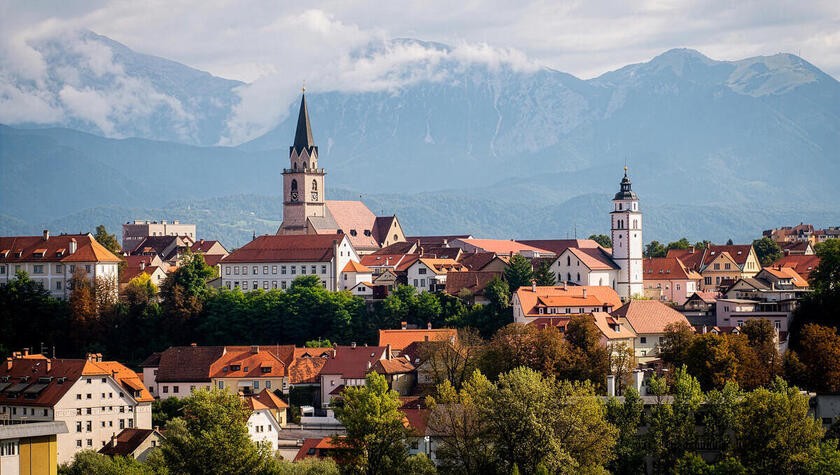
Cities will only be able to manage transport, air quality and public services efficiently if they have reliable data. With the help of Riko and 3fs, Kranj and Pula have established a common data space within the European project UrbanMind, which enables the collection, exchange and use of data in real time.
“We have very accurate and credible data. Also real-time data on air quality and traffic. They are also available to others, they are covered at the source. We also get them through sensors on local buses. With this, we are ready to take action, to better manage cities,” says Tomaž Lanišek, Head of the Office for Development and Smart Community in the Municipality of Kranj.
“We have very accurate and credible data. They are also available to others, they are collected at the source,” says Tomaž Lanišek, head of the Office for Development and Smart Community in the Municipality of Kranj.
They send data every 200 meters
“In Kranj, we have air measurement sensors installed on 12 buses of regular local lines. They send data every 200 meters. We measure 11 different air quality parameters, such as carbon and nitrogen dioxide, particulate matter (PM), humidity, temperature altitude, and we add location information. The data is credible. We have high-quality and calibrated measuring sensors, which are taken care of by the company Lotrič Metrology. With these sensors, we get as much data as if we had about 500 stationary measuring devices installed,” explains Lanišek.
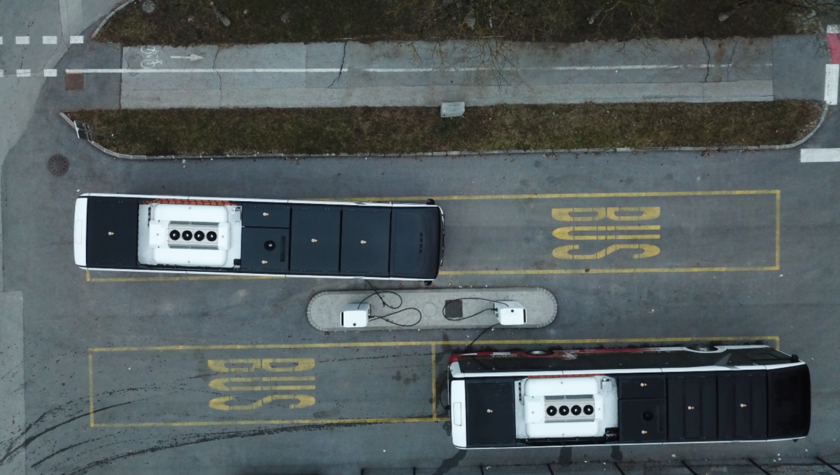
Sensor devices installed on the roof of the city's electric buses serve as measuring points from the UrbanMind project.
Pula is the first in Croatia
“By installing mobile measuring stations on public transport buses, the city of Pula has gained the possibility of continuous monitoring of air quality while driving, at locations that change during the day. This approach allows for a more accurate insight into the actual situation in the city, especially in areas that are not covered by fixed control devices,” the city of Pula is pleased with the new acquisition.
This makes Pula the first Croatian city to measure air quality on public transport buses in real time.
Mobile sensors enable a better understanding of air quality fluctuations in connection with traffic flows, loads associated with tourists, which are very high in Pula in the summer, and specific micro-local conditions.
It started in the Carniolan settlement of Mlaka
It all started in Kranj, where the village of Mlaka was chosen as the pilot area for the digitization of the city, and in 2020 they installed environmental sensors, smart meters for water and gas, electricity and transport, and everything necessary for the “smart” arrangement of telecommunications infrastructure. In addition to the municipality of Kranj, the companies Riko and 3fs played a leading role in the establishment of Smart Mlaka.
The project showed how a municipality can gain a better insight into the functioning of the urban environment through sensors, smart meters and digital platforms.
In a report by the European Commission and the consulting company Gartner, Smart Mlaka was already recognized as one of the four good examples of cities in the EU in the field of smart city solutions in 2022.
Kranj connected with the city of Pula
This was an additional incentive to continue the project. They connected with the city of Pula.
“Pula has about as many permanent residents as the city of Kranj, but in the summer there are several times more of them due to tourists,” explains Tomaž Lanišek.
Kranj, Pulj, Riko and 3fs have successfully applied for pilot projects for the creation of data spaces for smart communities in Europe. This is part of the European initiative UrbanMind, which combines data, advanced technology, sustainable mobility and environmental responsibility into a single model of the smart city of the future.
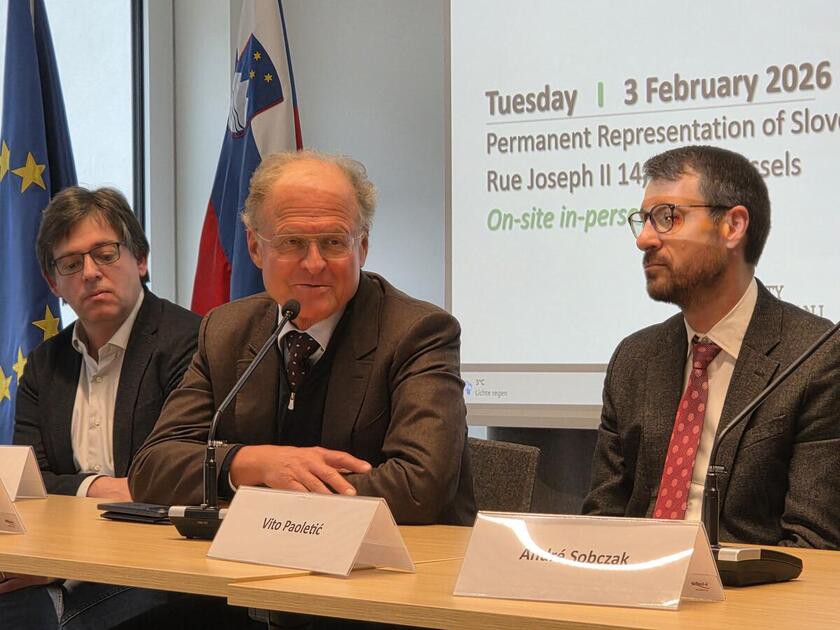
“UrbanMind responds to one of the biggest challenges of modern cities: how to connect different data sources, sensors, traffic flows, environmental measurements and digital services into a safe, interoperable and usable infrastructure,” explained Janez Škrabec, CEO of Riko, at the presentation of the project in Brussels.
The call was held within the framework of the Digital Europe – European Data Space for Smart Communities project. The total value of the project was three million euros, and it ended in May 2026.
UrbanMind is one of the first European pilots for the creation of data spaces for smart communities under the Digital Europe programme.
As part of the implementation of the UrbanMind project, the Smart Mlaka data space was upgraded into a fully functional data space.
Data from different systems are used together
A data space allows municipalities to use data from different systems together, rather than separately. This opens up opportunities for faster decision-making, the development of new digital services and reduces the costs of introducing new solutions.
The main innovation of UrbanMind is not only the collection of data, but its integration into a single data space. This allows cities, public companies and other operators to use the same data without duplicating it, while keeping the data at its source. This lowers the cost of integrations, increases interoperability and enables the development of new digital services.
“UrbanMind responds to one of the main challenges of modern cities: how to connect various data sources, sensors, traffic flows, environmental measurements and digital services into a safe, interoperable and usable infrastructure,” explains Janez Škrabec, CEO of Riko.
The model may expand to other cities
A particular value of the project is its European dimension. UrbanMind is not designed as an isolated local solution, but as a model that can be expanded and transferred to other European cities. Scalability and interoperability are at the heart of the design: the platform enables the integration of new applications, the integration of additional infrastructure and the use of common European standards for secure, trustworthy and efficient data exchange.
They were joined by Ajdovščina, Celje and Tržič
Now they have managed to include the cities of Ajdovščina, the municipality of Celje and Tržič in the project. They have obtained one million euros of additional funds and this part of the project will take place from August 1 to October 31 this year.
“Restricted sites are already collecting certain data. Since we have a common data lake, it will be possible to share this data and exchange experiences,” explains Tomaž Lanišek.
These are the roles of partners
The Municipality of Kranj has the role of the leading pilot city in the UrbanMind project. In Kranj, the project is specifically focused on monitoring traffic flows in the city center, detecting congestion, monitoring the movement of vehicles, pedestrians and cyclists, and using artificial intelligence to predict and optimize traffic.

The city of Pula acts as a secondary pilot location and an important example of the transfer of the solution to another urban environment.
The central professional and connecting role in the project is played by Riko. Riko is responsible for the development and implementation of UrbanMind’s technical infrastructure, i.e. sustainable and smart cities and communities. Riko is known for its holistic approach, combining technical expertise and project management to develop efficient, sustainable and smart platforms for modern cities and to provide comprehensive solutions in various international markets. Its role includes laying solid technical foundations of the data space, ensuring interoperability, secure data processing, compliance with European standards and connecting partners into an efficient project unit.
3fs brings top-notch expertise to UrbanMind in the field of software development, digital platforms, Internet of Things (IoT) solutions and cloud technologies. The company is responsible for developing scalable and interoperable digital solutions, including applications for traffic monitoring, predictive analytics and real-time environmental monitoring.
3fs is a leader in digital innovation, known for developing cutting-edge digital products for regulated industries such as medical technology (medtech), IoT, and telecommunications. With a strong foundation in advanced cloud technologies, software engineering, and user-centric design, 3fs transforms complex ideas into end-to-end solutions and co-creates the future of digital transformation on a global scale.
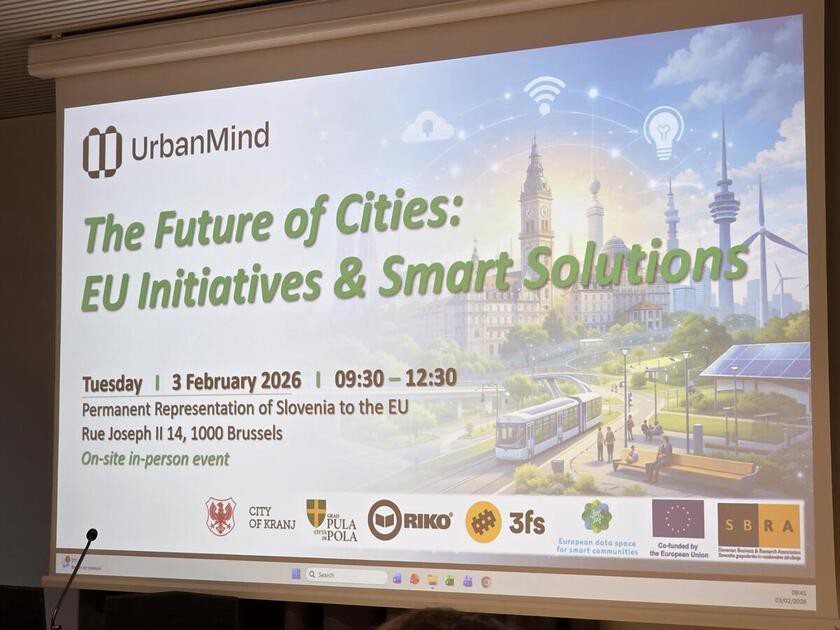
UrbanMind is one of the first European pilots for the creation of data spaces for smart communities under the Digital Europe programme. The photo is from the presentation of the project in Brussels.
